Downsizing to Collingwood
Downsizing is one of the most common reasons people buy in Collingwood. Empty nesters selling the family home in the GTA, retirees swapping a suburban house for something more manageable, and couples looking to trade square footage for lifestyle all end up looking at Collingwood as a destination for their next chapter. The appeal is clear: a smaller home in a town with outdoor recreation, a walkable core, and a community built around the things people actually want to do once the kids are grown and the long commute is over.

But downsizing involves more than just buying a smaller house. The financial mechanics, the emotional adjustments, and the practical realities of moving from a larger home in one place to a smaller home in another all deserve careful thought. This guide walks through the downsizing process as it applies to the Collingwood market, covering housing options, costs, neighbourhoods, and the lifestyle shift that comes with the move.

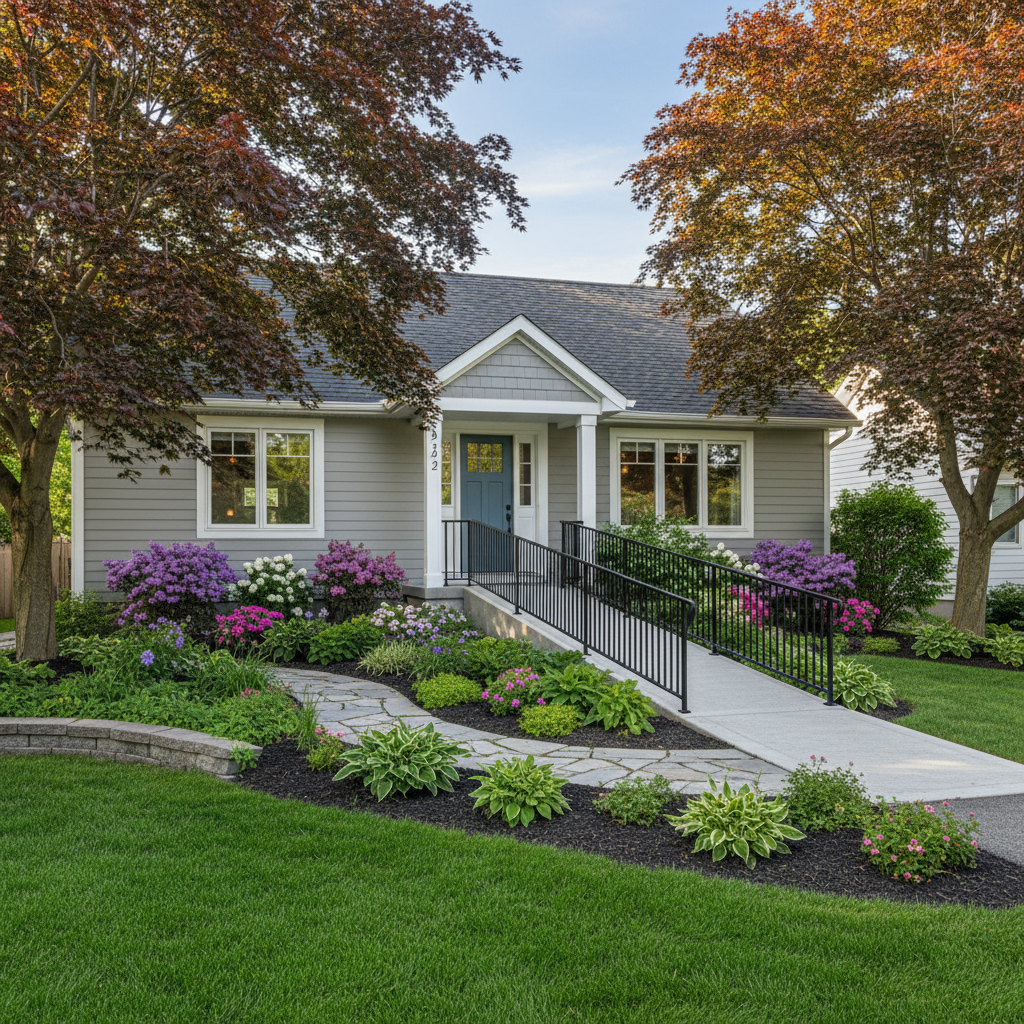
Well-maintained bungalow suitable for downsizing in Collingwood

Bungalows in established neighbourhoods are the most sought-after downsizing option in the Collingwood area.

Why Collingwood Attracts Downsizers

The typical downsizing buyer arriving in Collingwood is coming from the GTA or another urban centre, selling a property worth considerably more than what they plan to buy. The equity difference funds the next stage of life, whether that means a mortgage-free home, a bolstered retirement account, or both. Collingwood sits at a price point that allows this math to work for many buyers, though the gap has narrowed as local prices have risen.

Beyond the financial equation, the lifestyle draw is real. Collingwood offers year-round outdoor recreation without requiring a cottage. Georgian Bay, Blue Mountain, the harbour trail, and the escarpment trails are minutes away rather than hours. The downtown has enough restaurants, shops, and cultural offerings to feel engaged without the scale and pace of a city. For people who spent decades working and commuting, that daily rhythm is the whole point of the move.

The social dimension matters too. Collingwood has a large population of people who made the same transition. Newcomers who arrive as downsizers find a ready-made community of people in the same life stage, which makes building a new social network significantly easier than it would be in a town without that critical mass.

Housing Options for Downsizers

Downsizers in Collingwood generally choose between three housing types, each with distinct advantages and limitations.

Bungalows

Single-level living is the top priority for many downsizers, and bungalows in Collingwood are the most competitive segment of the market. Demand consistently outstrips supply, particularly for bungalows in walkable locations near downtown or the harbour. Prices for well-maintained bungalows in desirable areas reflect this demand.

The Heritage District offers bungalows with the best walkability in town, but they come at premium prices and rarely stay on the market long. East Collingwood has more affordable bungalow stock on larger lots, though you trade walkability for value. South Collingwood offers the lowest price points for detached, single-level homes but is the most car-dependent. Our neighbourhoods guide maps these areas in detail to help you target your search.

Buyers shopping for bungalows should be prepared to move quickly. In a market where this housing type is chronically undersupplied, hesitation often means losing the property to a competing offer.

Condominiums

Condos offer downsizers the closest thing to a maintenance-free lifestyle. No lawn to mow, no snow to shovel, no roof to worry about. For people downsizing specifically to escape the burden of home maintenance, condos are the logical choice.

Collingwood's condo market is concentrated in two areas: the harbour zone and the Blue Mountain resort area. Harbour condos appeal to downsizers who want to be near downtown and the waterfront. Resort-area condos appeal to those who want proximity to the mountain and access to resort amenities. Pricing varies by building, size, views, and fees.

The critical consideration with condos is the fee structure. Monthly condo fees cover building maintenance, insurance, reserve fund contributions, and amenities. These fees increase over time and can represent a significant monthly expense on top of your taxes and utilities. Always review the condo corporation's financial statements and reserve fund study before buying. A building with low fees and a weak reserve fund is a problem waiting to surface.

Modern condo interior with open floor plan suitable for downsizing

Condos offer open floor plans and maintenance-free living that appeals to many downsizers.

Townhouses

Townhouses split the difference between bungalows and condos. They typically offer more space than a condo, a small outdoor area, and lower maintenance demands than a detached home. Newer townhouse developments in Collingwood, particularly near the mountain area, have been designed with downsizers in mind, featuring main-floor master bedrooms, open layouts, and accessible designs.

The trade-off is that most townhouses are multi-level, which may not suit downsizers whose primary motivation is avoiding stairs. Some newer developments include bungalow-style townhouse units, but these are limited in number and tend to sell quickly.

The Financial Side of Downsizing

The financial mechanics of downsizing to Collingwood are straightforward in concept but have details that catch people off guard. Understanding the full picture helps you plan realistically.

If you are selling a primary residence in the GTA, the sale is generally exempt from capital gains tax under the principal residence exemption. The proceeds from a higher-value property in the GTA, minus the purchase of a lower-value property in Collingwood, typically leave you with a surplus that can be invested or used to support retirement.

However, the price gap between GTA and Collingwood properties has narrowed considerably. A decade ago, selling a typical GTA house and buying in Collingwood could free up several hundred thousand dollars. Today, depending on the specific properties involved, the surplus may be smaller than expected. Run the actual numbers with current market data rather than relying on assumptions from a few years ago.

Transaction costs add up. Real estate commissions on the sale, land transfer tax on the purchase, legal fees, moving costs, and any renovation or furnishing expenses for the new home can easily total five to eight percent of the transaction value. Factor these into your net equity calculation.

Ongoing costs in Collingwood include property taxes, which our property tax guide covers in detail, along with heating costs that may be higher than what you paid in a more temperate part of Southern Ontario. Condo fees, if applicable, represent an additional ongoing expense that did not exist in a detached home.

The Lifestyle Adjustment

Downsizing is as much an emotional and lifestyle transition as a financial one. People who have lived in the same house for 20 or 30 years, who raised their children there and built their social networks around it, face a genuine adjustment when they move to a new town and a smaller space.

The physical downsizing, deciding what to keep and what to let go, is often harder than expected. Decades of accumulated belongings do not fit into a smaller home, and the process of sorting, donating, selling, and discarding takes longer and carries more emotional weight than most people anticipate. Start the process well before your move date.

Socially, the transition requires effort. You are leaving an established community and entering a new one. Collingwood makes this easier than most places because of its large downsizer and retiree population, but it still takes initiative. Join clubs, volunteer, attend community events, and make a deliberate effort to build connections in the first year. The retirement guide covers social integration strategies in more detail.

The pace-of-life change is real and mostly positive, but it takes adjustment. Small-town living means fewer options for dining, entertainment, and shopping than you may be accustomed to. The trade-off is less traffic, shorter distances, and a daily rhythm oriented around lifestyle rather than logistics. Most downsizers report that once they adjust, they do not want to go back.

Couple walking along the harbour trail in Collingwood

The harbour trail and walkable downtown are daily highlights for Collingwood residents who have downsized from larger homes.

Timing Your Move

The real estate market has seasonal patterns in both the GTA and Collingwood that affect your transaction. Spring is typically the strongest selling season in the GTA, which may maximize the price you get for your current home. However, spring is also when competition for desirable Collingwood properties is highest.

Some downsizers choose to sell first and rent temporarily in Collingwood while they search for the right property. This eliminates the pressure of coordinating two transactions simultaneously and gives you time to learn the market and the neighbourhoods before committing. Rental availability in Collingwood can be tight, so securing a short-term rental in advance is advisable if you take this approach.

Others prefer to buy first if their financial situation allows carrying two properties temporarily. This approach removes the risk of being left without a home if the Collingwood market is competitive when you need to buy, but it requires the financial capacity to manage two sets of carrying costs for a period.

There is no universally right approach. The best strategy depends on your financial flexibility, your tolerance for risk, and how quickly you need the transition to happen. Understanding four-season living in Collingwood will help you choose a timing that lets you experience the town in a realistic season before committing to a purchase.

Making the Move Work

The downsizers who are happiest in Collingwood share a common approach: they came with realistic expectations, chose the right housing type for their actual needs, and invested effort in building their new lives rather than waiting for the community to come to them.

Be honest about what you need. A bungalow with a garden is wonderful, but if you will be traveling frequently, condo maintenance may serve you better. A location near the mountain sounds appealing, but if you value walkable errands over ski access, downtown makes more sense.

Visit the town in winter before you buy. This is the most important piece of advice in this guide. Collingwood in August and Collingwood in February are different experiences. Both can be excellent, but you need to know that the winter version of this place works for you before you commit your home equity and your future to it.

Downsizing to Collingwood is a move that thousands of Ontarians have made successfully. The town is built for it, the community welcomes it, and the lifestyle rewards it. With clear-eyed planning and a willingness to embrace a smaller home and a bigger life, it can be one of the best decisions you make.